I've always been fascinated by jewelry making, and I love experimenting with different materials. Silver, in particular, has always caught my eye. I remember when I first started out, I was drawn to the allure of .999 pure silver. It seemed like the purest, most luxurious option. But as I gained more experience, I realized that there's more to silver jewelry than just purity.
I decided to create a chunky silver ring using .999 silver. I loved the idea of having a piece made of almost entirely pure silver. The ring turned out beautifully at first. It was shiny and impressive. But after wearing it for a while, I noticed something. The details I had carefully hammered into the design started to wear down much faster than I expected. This got me thinking: is .999 silver really the best choice for all types of jewelry?
I started researching and asking other jewelers about their experiences. I found that my experience wasn't unique. Pure silver, being so soft, is more prone to dents and warping over time. This is especially true for pieces that are worn frequently or exposed to a lot of wear and tear. I also noticed that my .999 silver ring, while slow to tarnish, didn't maintain the same bright, desirable polish as other silver pieces I owned. It developed a dull, matte finish relatively quickly.
One of the key differences lies in the composition. .999 silver is almost entirely pure silver, while sterling silver (.925) contains 92.5% silver and 7.5% other metals, typically copper. This copper content significantly increases the durability of the metal.
I started experimenting with .925 sterling silver, and I immediately noticed a difference. It was more resistant to scratches and dents. The designs I hammered into .925 silver held up much better over time. While .925 sterling silver does tarnish, it's also much easier to polish and maintain that bright, shiny look.
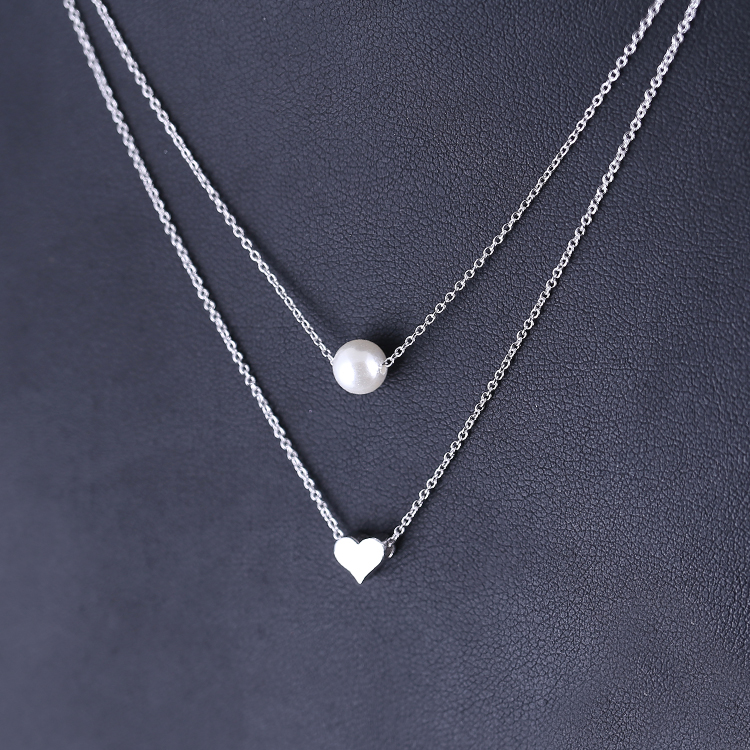
Consider this beautiful 925 Sterling Silver heart Double Necklaces & Pendants. The sterling silver ensures it will hold its shape and shine for years to come.
I even found that some jewelers prefer using .999 silver for specific purposes, like creating bezels for setting stones. The softness of the pure silver makes it easier to manipulate and form around the stone without damaging it. However, for most jewelry pieces, especially those designed for everyday wear, .925 sterling silver is generally a better choice.
To summarize my findings, here's a quick comparison of the pros and cons of each type of silver:
Now, when I'm choosing silver for a new piece, I carefully consider its intended use. For delicate pieces or items that will be worn frequently, I almost always opt for .925 sterling silver. I've found that it provides the best balance of beauty and durability. For larger, more sculptural pieces that aren't exposed to as much wear, .999 silver can be a good option. However, it's important to be aware of its limitations.
I also considered an alternative that someone suggested: 945 silver. I haven't tried it myself, but the idea is to get a whiter color similar to .999 silver, but with added hardness. It's definitely something I plan to explore in the future.